
Helping Siblings Repair After Conflict
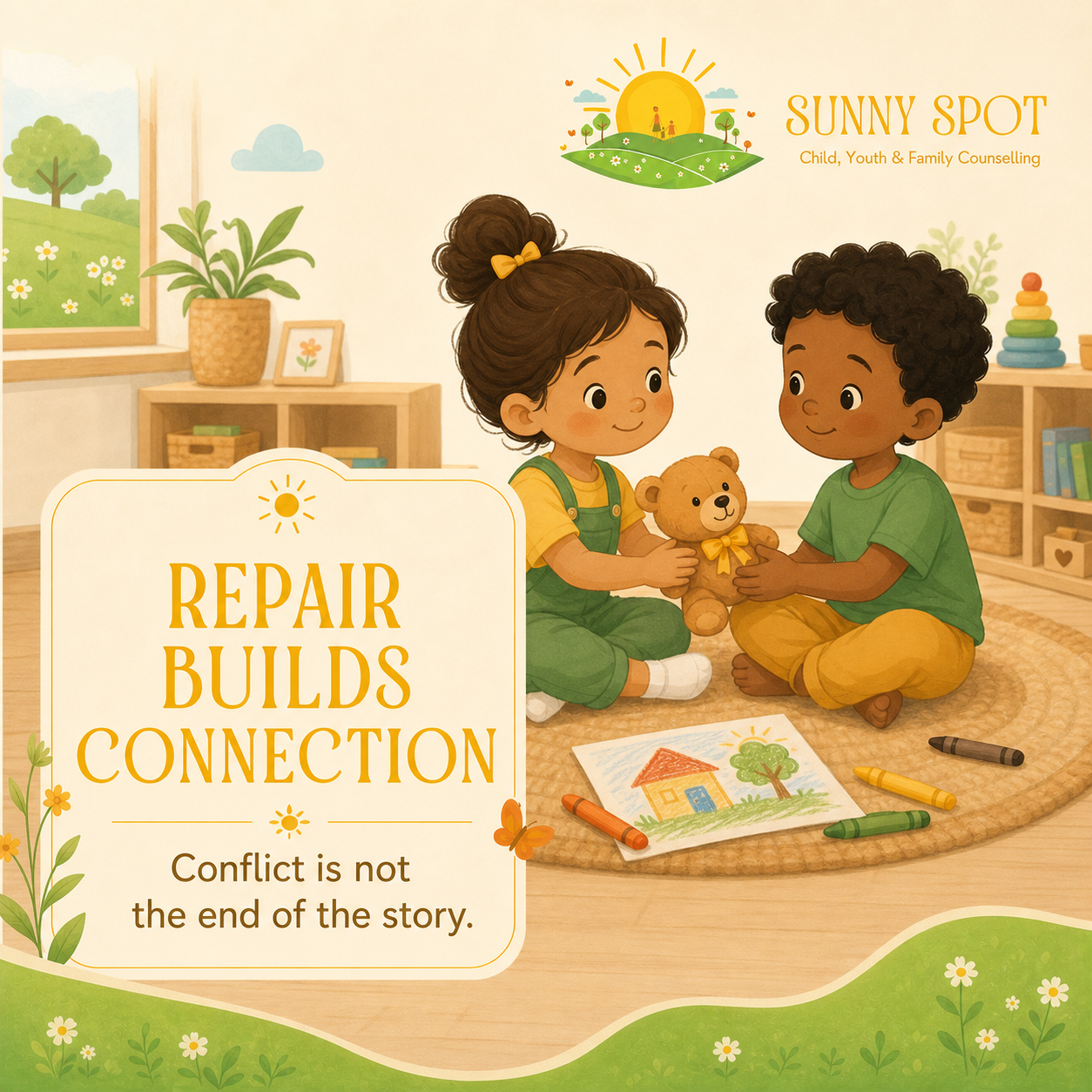
Sibling conflict can fill a home in seconds.
Someone grabs a toy. A voice gets louder. One child pushes. Another screams. Both children want you to decide who was wrong, and you may already be carrying dinner, work, laundry, messages, and your own exhausted nervous system.
Mothers are often expected to become an investigator, referee, and therapist at the exact moment they have the least capacity.
The goal does not need to be a perfect resolution. The goal can be safety, understanding, and one meaningful step toward repair.
Begin with safety
If children are hitting, throwing objects, or unable to stay physically safe, separate them calmly. Use simple language such as, "I will not let you hurt each other. We are taking space."
This is not the moment to demand explanations. Overwhelmed children usually cannot reflect well while their bodies are still in protection mode.
Help each child settle
Different children may need different things. One may want closeness. Another may need quiet. Offer water, movement, a comfortable space, or a few minutes with fewer words.
You do not need to determine who started it before helping both children regulate.
Hear each story separately
Once everyone is calmer, give each child a chance to explain without interruption. You might say, "Tell me what happened from your point of view," or, "What were you needing in that moment?"
Listen for the need underneath the behaviour. A child may have wanted fairness, space, attention, control, or a turn.
Understanding a need does not mean approving harmful behaviour. You can validate the feeling and still hold the limit.
"You were furious that your tower was knocked down. Hitting is not safe."
Move beyond forced apologies
A quick apology can end the conversation without creating repair. Instead of forcing the words, help the child consider the impact.
Ask, "What do you think that was like for your sibling?" and, "What might help make things a little better?"
Repair could include returning an item, rebuilding something, getting ice, drawing a note, giving space, or making a plan for next time.
Practise the missing skill
Conflict often reveals a skill that is still developing. Children may need help asking for a turn, protecting their space, noticing frustration earlier, negotiating rules, or getting an adult before things become unsafe.
Practise one simple phrase while everyone is calm. "I am still using that." "Please move back." "Can we make a plan?"
Reconnection can be small
Children do not need to become cheerful immediately. Reconnection may be sitting in the same room, sharing a snack, or returning to separate activities without hostility.
Repair is not about pretending the conflict did not matter. It teaches children that relationships can survive hard moments and that they have some power to make things right.
A compassionate note for mothers
You will not guide every conflict beautifully. Sometimes you will raise your voice or rush the process because the family has to get out the door.
You can repair too. "I was overwhelmed and I yelled. I want to try that again."
Children learn about healthy relationships by watching adults return after difficult moments, not by watching adults perform perfection.
If sibling conflict is frequent, intense, frightening, or regularly unsafe, consider seeking individualized professional support.
Sunny Spot provides relationship first counselling for children, youth, parents, mothers, and families in Port Coquitlam and the Tri Cities.
Related services & support
Have Questions About Your Child?
Book a free 15 minute consultation to see if Sunny Spot is the right fit for your family.
Book a Free 15 Minute Consultation