
What Progress in Child Counselling Can Actually Look Like
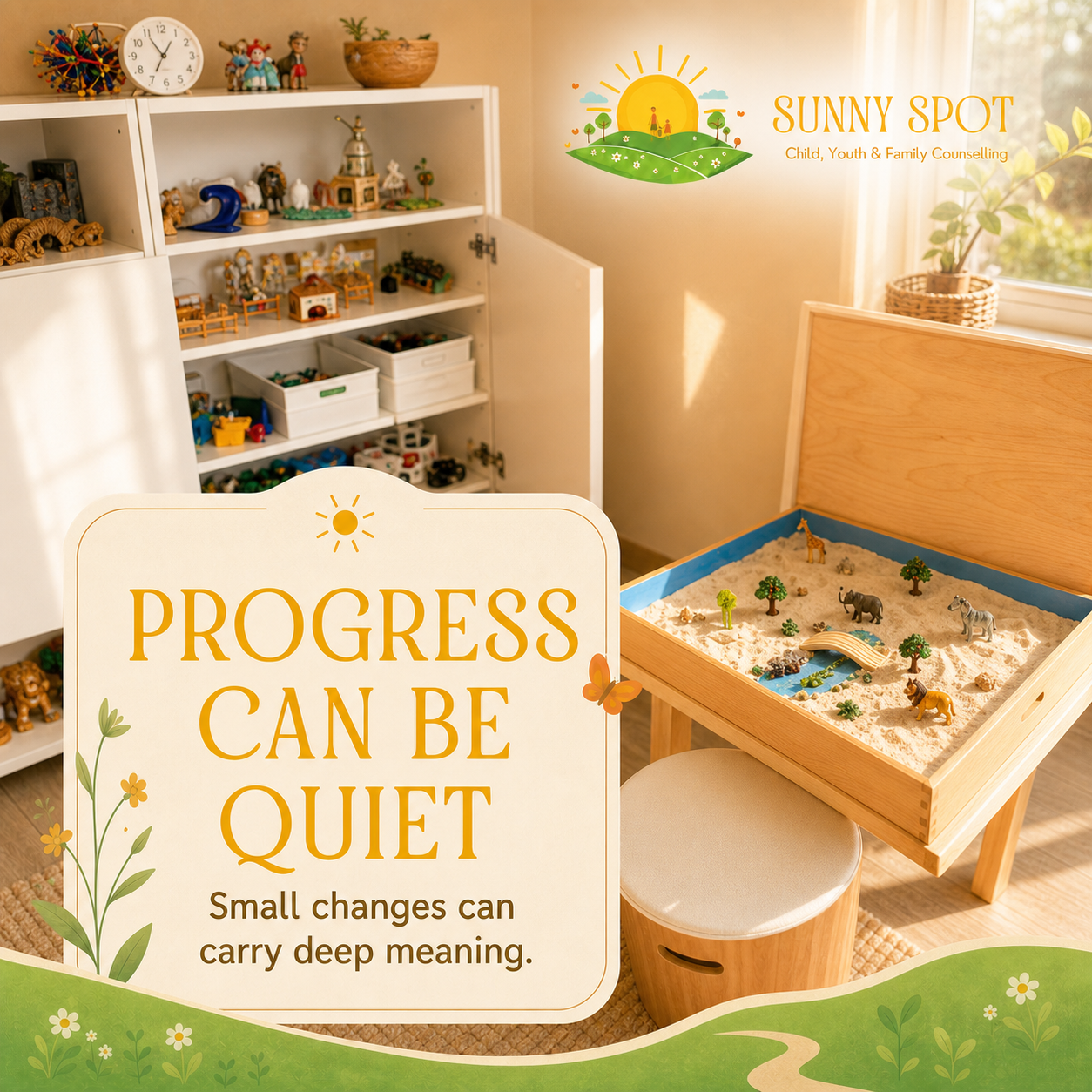
When a mother brings her child to counselling, there is usually a lot of hope underneath the worry.
You may hope the meltdowns stop. You may want school mornings to feel easier, anxiety to loosen its grip, or communication to become less painful. You may also wonder how you will know whether counselling is helping.
Progress in child counselling is not always a dramatic transformation. It is often quieter, less linear, and more human than families expect.
Progress may begin with safety
Before a child uses new coping skills or talks openly about difficult experiences, they may first need to feel safe with the counsellor and the space.
Early progress might look like entering the room with less hesitation, choosing an activity, sharing a joke, correcting the counsellor, or becoming comfortable enough to say no.
These moments can seem small, but they may show that trust is growing.
Feelings may become easier to notice
A child may begin recognizing emotions earlier. Instead of moving from calm to overwhelmed without warning, they might notice a tight chest, a busy mind, clenched hands, or the urge to hide.
They may not manage the feeling perfectly. Progress can simply mean noticing it sooner or finding one word, picture, or gesture that helps another person understand.
Recovery may become gentler
The goal is not a child who never becomes upset. Children are allowed to have powerful feelings.
Progress might mean recovering a little sooner, accepting comfort, asking for space, trying a coping tool, or reconnecting after conflict. A difficult moment may still happen, but it does not last quite as long or leave everyone feeling as disconnected.
Your child may advocate for themselves
A child might begin saying, "That is too loud," "I need a break," "Please stop," or, "Can you stay with me?"
Self advocacy is an important form of growth. It can sometimes look less compliant because the child is becoming clearer about their needs and boundaries.
Family patterns may shift
Child counselling can also support changes around the child. Parents may understand triggers more clearly, respond with greater confidence, reduce unhelpful power struggles, or repair more quickly after hard moments.
Sometimes the first meaningful change is not that the child behaves differently. It is that the family understands the behaviour differently.
Progress is not a straight line
Children may show growth in one setting before another. Stress, illness, transitions, school demands, sleep, and family changes can all affect how a child copes.
A hard week does not automatically erase previous growth. Look for patterns across time rather than expecting every day to improve.
Ask your child's counsellor what they are noticing, what goals are being supported, and how caregivers can reinforce helpful skills at home. Counselling should remain collaborative and responsive to your child and family.
Hold hope without demanding perfection
Progress may be a child who asks for help once. A mother who pauses before reacting. A repair that happens before bedtime. A feeling that finally has a name.
Small changes can create more space for safety, confidence, and connection.
Sunny Spot provides warm, relationship first counselling for children, youth, parents, mothers, and families in Port Coquitlam and the Tri Cities.
Related services & support
Have Questions About Your Child?
Book a free 15 minute consultation to see if Sunny Spot is the right fit for your family.
Book a Free 15 Minute Consultation