
Why My Child Holds It Together at School but Melts Down at Home
Published September 1, 2026

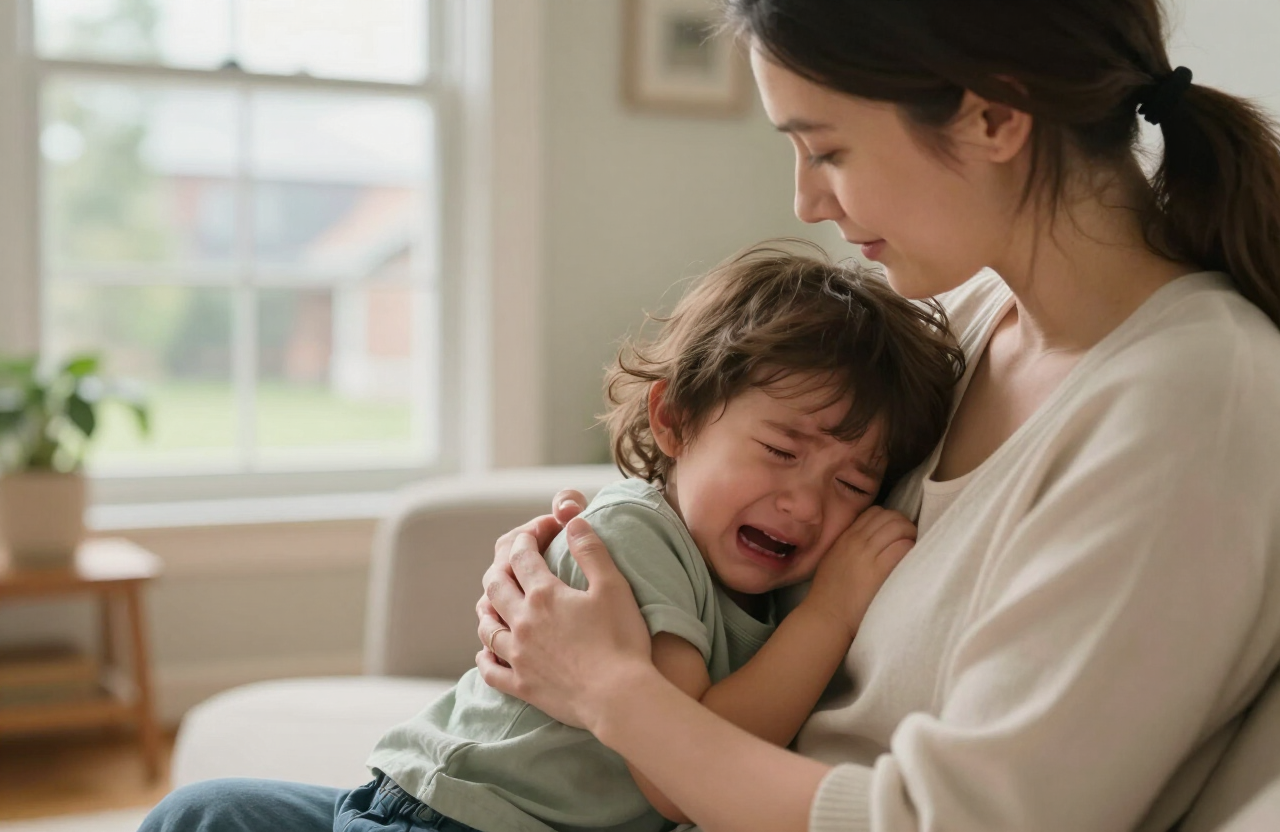
Your child's teacher says they had a great day. Calm, cooperative, on task. Then you walk through the door at pickup, and within ten minutes the snack is wrong, the shoes are wrong, you are wrong, and everyone is in tears.
If this pattern feels familiar, you are not imagining it, and you are not doing something wrong. Many children hold themselves together all day and let go the moment they reach the person and place that feels safest. This article explores why that can happen, what it usually does not mean, and what a gentler after-school landing can look like.
What parents may notice
The after-school release can take many forms. You might see any of the following:
- A child who is cooperative at school becoming tearful, rigid, or explosive within minutes of getting home
- Meltdowns that seem out of proportion to the trigger, a wrong cup, a sibling's glance, a transition that usually goes fine
- A teen who manages the school day then shuts down, goes quiet, or snaps once they are behind their own door
- Recovery that takes much longer than the reaction itself
- A pattern that repeats most days rather than appearing once after a genuinely hard day
None of these on their own tells you exactly why it is happening. They are signals worth getting curious about, not verdicts on your child's character or your parenting.
Why school and home can look like two different children
School asks a great deal of a child's nervous system. Sitting still, following instructions, navigating noise and crowds, reading social cues, managing disappointment in front of peers, and holding back impulses all draw on the same regulation resources. A child who appears calm at school is often working very hard to stay that way.
Home is different by design. It is the place where the performance can drop. A child does not usually fall apart at school because school does not feel safe enough to fall apart in. They fall apart at home because home is where they no longer have to hold it together. That is a sign of trust, not of failure.
Masking is not the same as choosing to behave
Some children, particularly those who are anxious, autistic, or have ADHD, may mask during the school day. Masking means suppressing the natural response, holding still when you want to move, smiling when you are overwhelmed, mimicking peers to blend in. It is not deception. It is a nervous system doing what it has learned is safest in a less predictable environment.
Masking has a cost. The energy it takes does not disappear; it is stored until the child reaches a place where the mask can come off. The after-school meltdown is often the bill for a day of masking arriving all at once.
Understanding what a nervous system needs in the moment is the heart of emotional regulation support, where co-regulation comes before correction.
When worry is part of the picture, the holding-on can be even more intense. A child who has spent the day managing anxiety may arrive home with nothing left. Our page on anxiety counselling describes how worry can quietly drain a child's capacity long before anyone notices.
Why home becomes the release point
Children release where they feel safest. The person who receives the meltdown is usually the person the child trusts most to still love them after they fall apart. That is cold comfort in the moment, but it reframes what is happening: your child is not saving their worst for you. They are saving their most honest self for you.
This also means the meltdown is not a measure of how the school day really went. A child can have a genuinely good day and still fall apart at home, because the release is about accumulated demand, not about one bad event.
Try this: a gentle after-school landing
- Greet without questions. A warm hello and a snack, no interrogation about the day.
- Offer a low-demand transition. Fifteen to twenty minutes of quiet, movement, or unstructured play before any request.
- Let the body lead. Some children need to move hard; others need stillness and a blanket.
- Hold questions for later. Save questions about the day for after the nervous system has settled.
- Lower the bar for the first hour. If homework or chores can wait, let them wait.
This free 15-minute call is for prospective new clients to ask questions and see if Sunny Spot feels like the right fit — it is not a counselling or parent-coaching session.
What to avoid during peak overwhelm
What tends to make it harder
- Problem-solving or teaching in the middle of the meltdown. The reasoning brain is offline.
- Demanding an explanation right away. The question what is wrong often makes the alarm louder.
- Taking the reaction personally. It is about accumulated load, not about you.
- Matching the intensity. Your escalation adds to theirs; your steadiness gives them something to borrow.
Repair after a hard afternoon
Once the storm has passed, repair matters more than analysis. You do not need a full debrief. A simple acknowledgment is often enough: that was a hard one, and I am glad we are okay now. If something important happened at school, it can wait until after dinner or even tomorrow, when both of you have more capacity.
Many children feel embarrassed after a big release. Naming it gently, without shame, helps them separate a difficult moment from who they are: that was a lot of feeling, not a lot of you.
When additional support may help
An after-school release is common and often eases with a calmer landing and time. It may be worth exploring support when the pattern is happening most days, lasting well into the evening, interfering with sleep or friendships, or leaving everyone exhausted. You do not need a crisis to reach out.
When ADHD-related regulation differences are part of the picture, our ADHD counselling page describes neurodiversity-affirming support, and parent coaching offers a dedicated space to build practical responses you can carry into real moments at home.
Keeping supports consistent between home and school can lighten the load on both. With your consent, Sheila can collaborate with teachers through school collaboration, and families from Coquitlam and across the Tri-Cities are welcome at the Port Coquitlam office for in-person child and teen counselling.
If sensory overload seems to be part of the picture, our article on what a sensory break can look like offers concrete examples, and our piece on when big feelings come home goes deeper into responding with connection and lower demands.
This article offers general education, not diagnosis or crisis care. If a child may be in immediate danger or cannot stay safe, contact emergency services or an appropriate local crisis resource right away.
For things to try at home, explore our free parent resources for after-school regulation and big feelings.
Frequently asked questions
Does this mean my child is unhappy at school?
Not necessarily. A child can have a good day and still fall apart at home, because the release reflects accumulated demand rather than one bad event. If you are concerned, a gentle check-in with the teacher can help you compare what they see with what you see.
Should I talk to the school about it?
It can be helpful. With your consent, Sheila can collaborate with teachers to keep supports consistent across environments. Our school collaboration page describes how that works.
Is after-school restraint collapse only an ADHD or autism thing?
No. It can happen for many children, though it is often more intense for neurodivergent children who mask during the day. The pattern is not a diagnosis; it is information about where your child's nervous system is landing.
What if I am the one who is depleted?
That is worth paying attention to. Being the safe place for big feelings is meaningful and it costs something. Parent coaching offers a space to build your own regulation and practical responses alongside your child's support.
When should I consider counselling?
If the pattern is happening most days, lasting long into the evening, affecting sleep or friendships, or leaving the whole family exhausted, a conversation may help. You do not need to wait for a crisis to explore support.
When after-school meltdowns are wearing on the whole family, in-person child and teen counselling at Sunny Spot's Port Coquitlam office welcomes families from Coquitlam, Port Moody and across the Tri-Cities.
This free 15-minute call is for prospective new clients to ask questions and see if Sunny Spot feels like the right fit — it is not a counselling or parent-coaching session.
Sources and Further Reading
Related services & support

Written by
Sheila Aini, MC, RCCRegistered Clinical Counsellor · Sunny Spot Child, Youth & Family Counselling
Sheila supports children, teens, parents and families through relationship-first, trauma-informed and neurodivergent-affirming counselling at Sunny Spot's Port Coquitlam office, welcoming families from Coquitlam, Port Moody and across the Tri-Cities.

Have Questions About Your Child?
Book a free 15-minute consultation to see if Sunny Spot is the right fit for your family.
Book a Free 15-Minute Consultation