
How to Introduce Counselling When Your Child or Teen Does Not Want to Go
Published September 21, 2026

You have spent weeks wondering whether your child needs more support. You research counsellors, make a call, and finally bring up the idea. Your child responds before you finish the sentence:
"I'm not going."
You may hear that counselling is pointless, embarrassing, only for people with serious problems, or proof that you think something is wrong with them. A younger child may cry, hide, or ask whether they are in trouble. A teen may become angry that you shared concerns with a stranger.
This can leave parents feeling stuck. You do not want counselling to become another power struggle, but you are also worried enough that doing nothing does not feel responsible.
Resistance does not always mean a child will never engage. It may mean they are afraid of being judged, do not understand what will happen, had a negative past experience, worry about privacy, dislike feeling controlled, or cannot see how counselling connects to anything they want.
How support is introduced matters. Children and teens are more likely to enter counselling with dignity when adults explain the purpose without blame, give developmentally appropriate choices, answer privacy questions honestly, and treat fit as important.
This article offers general guidance. If there is an immediate safety concern, urgent assessment may be needed even when a young person does not want help. Call 9 1 1 for immediate danger or call or text 9 8 8 in Canada for suicide crisis support.
The short answer for the first conversation
Avoid introducing counselling in the middle of an argument or as a consequence.
Choose a calmer time and try:
"You are not in trouble, and I do not think you are broken. I have noticed that things have been feeling harder lately. I want us to have more support, not more blame. I found a counsellor whose job is to get to know you and help us understand what would make life feel more manageable. You can ask questions, and your opinion about whether the fit feels right matters."
Then pause.
Do not immediately fill the silence with a sales pitch. Your child may need time to react before they can become curious.
Why children and teens may refuse counselling
Resistance is often communication. Common concerns include:
- "You think I am the problem."
- "You are going to tell the counsellor everything bad I have done."
- "The counsellor will take your side."
- "I will have to talk about private things."
- "Everyone will know."
- "I had a counsellor before and it did not help."
- "I do not want another adult asking me questions."
- "Nothing can change."
- "If I start talking, I will lose control."
- "I should be able to handle this myself."
- "I do not want you making decisions about me."
You do not need to agree with every concern to take it seriously. Ask:
"What is the worst part about the idea?"
The answer helps you respond to the actual barrier rather than repeating why counselling is good.
Do not use counselling as a threat
Statements such as "If you keep acting like this, I am taking you to therapy" teach a child that counselling is where difficult people are sent. The appointment becomes evidence that they failed.
Try framing support as something the family is adding because the situation deserves more care:
"We have been getting stuck in the same arguments, and I want help changing the pattern. This is not all on you."
"You have been carrying a lot. A counsellor can be another person on your team."
"I do not expect you to know exactly what to say. Getting comfortable is part of the beginning."
When appropriate, tell your child what you are willing to work on too. Counselling should not feel like an adult has hired someone to fix the child while everyone else stays the same.
Explain counselling in language that fits the child
For a younger child
Keep the explanation concrete and brief:
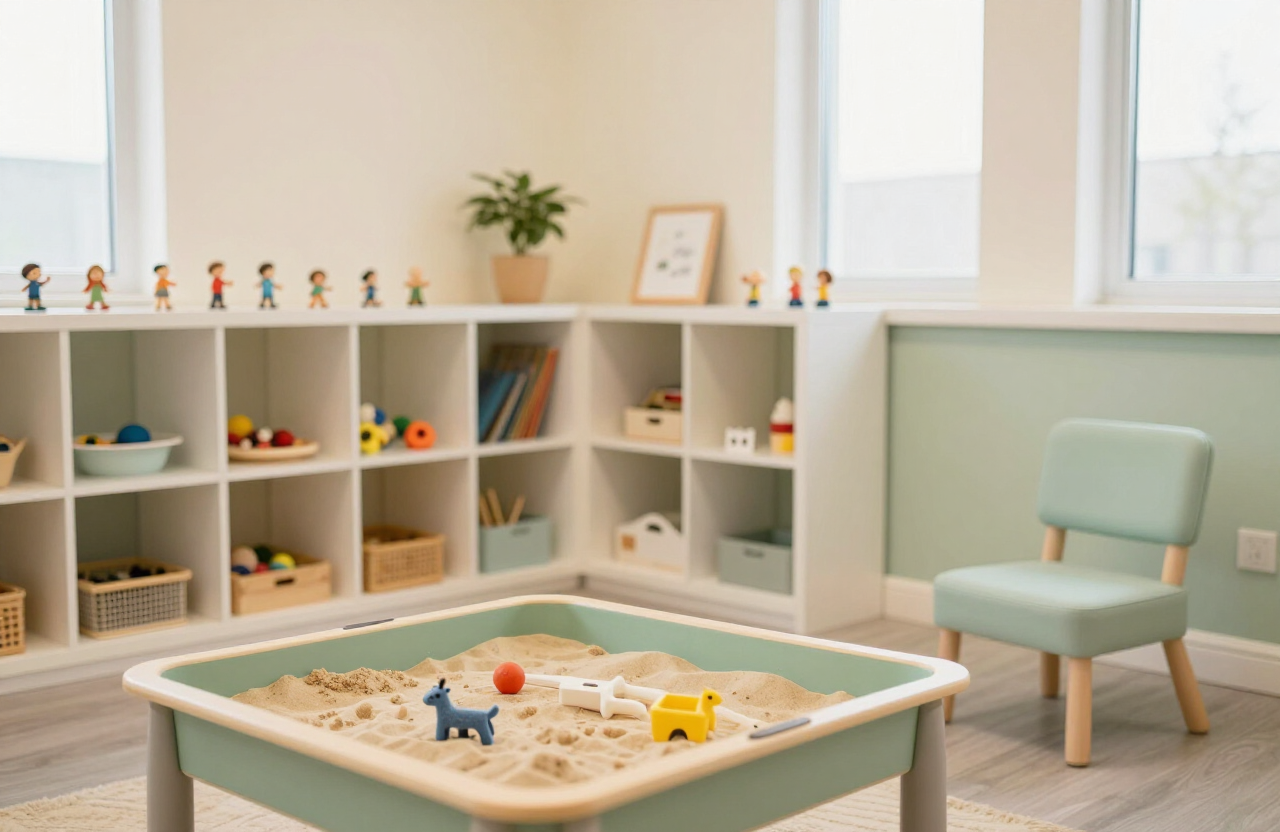
"We are going to meet Sheila. Her job is to help children and families with feelings, worries, and hard moments. There are toys and activities. You do not have to know what to say. First, we will learn about the room and each other."
Avoid promising exactly what will happen unless the counsellor has confirmed it. Show a photo of the office or counsellor when available. Tell the child who will attend, how they will arrive, and what will happen afterward.
For a school age child
Connect counselling to something the child has noticed:
"You have said that worry makes your stomach hurt and that mornings feel really hard. The counsellor helps children understand what their body is doing and practise ways to make hard moments more manageable."
For a teen
Respect autonomy and avoid a childish explanation:
"I know you may not want to talk to someone. I am concerned about how much stress you have been carrying. I would like you to meet this counsellor before deciding what you think. You can ask directly about privacy, goals, and what the sessions would look like."
Teens are more likely to engage when counselling connects to their priorities, not only the adults' concerns.
Be honest about privacy and its limits
Children and teens often want to know what the counsellor will tell their parents. Do not promise total secrecy. Privacy and consent depend on age, development, the counselling setting, legal and ethical obligations, and safety concerns.
A helpful general explanation is:
"The counsellor will explain what stays private and what they would need to share for safety. I will not expect a report of every word. I may be involved in goals and support, and I want you to have room that feels like yours."
Encourage your child or teen to ask the counsellor:
- What will you tell my parent?
- What happens if I do not want to answer a question?
- What would make you need to share something?
- Can I help choose the goals?
- What happens if I do not think we are a good fit?
Clear answers build trust better than vague promises.
Give meaningful choices without making support optional when safety is at risk
Children do not need complete control over every family health decision, but they benefit from real choices.
Offer choices such as:
- in person or virtual, when clinically appropriate and available;
- whether a caregiver joins the beginning;
- which approved appointment time feels better;
- whether they want to see office photos first;
- what name or pronouns the counsellor should use;
- which concern they most want help with;
- whether they would rather talk, draw, play, walk, or begin with an activity when options are available; and
- what question they want answered before the appointment.
Do not offer a choice you cannot honour. If the first meeting is happening, say so calmly and focus choice on how it happens.
"I hear that you would rather not go. I am responsible for getting support when I am concerned. You can choose whether I sit in for the first ten minutes or wait outside, and you can tell the counsellor what you dislike about the idea."
When there is no immediate safety issue, some families may begin with parent coaching while the child becomes more open to direct support.
Connect counselling to the child's own goals
Adults may want fewer arguments, better attendance, or improved emotional regulation. A young person may care more about sleeping, keeping a friendship, feeling less overwhelmed, having parents back off, or getting through a specific situation.
Ask:
"If counselling were useful, what would be different in your life?"
The teen might say:
- I would stop overthinking everything.
- I would not explode when people ask me questions.
- I could sleep.
- I would feel less awkward around people.
- You and I would fight less.
- I would be able to focus.
- I would understand why I feel like this.
Their goal may not match yours at first. That is okay. Engagement often begins with one change that matters to the young person.
What if they had a bad counselling experience before?
Do not minimize it or insist that all counsellors are different before hearing what happened.
Ask:
- What felt uncomfortable?
- Did you feel judged, bored, pressured, misunderstood, or exposed?
- Was the approach a poor fit?
- Did you know the goals?
- Were privacy expectations clear?
- What would need to be different next time?
Then acknowledge the impact:
"It makes sense that you do not want to repeat that experience. We will look for a different fit, and I will not ask you to pretend it worked when it did not."
Therapist fit matters. A qualified counsellor can still be the wrong fit for a particular child. Changing providers is not failure.
What happens in the first appointment?
The first session is usually an introduction, not a demand for the deepest story. The counsellor may explain privacy, learn what brings the family in, ask about strengths and concerns, and begin discussing goals.
For children, play and activity can be important ways of communicating. A child may explore the room, choose materials, or interact before using many feeling words. For teens, the counsellor may spend time building trust, clarifying what the teen wants, and discussing how caregivers will be involved.
It is reasonable to ask the counsellor in advance:
- Who attends the first session?
- How is consent handled?
- How are parents involved?
- What approaches are used?
- What does privacy mean here?
- How will we know whether the fit is working?
Knowing the structure can reduce anticipatory anxiety.
Do not demand a session report in the car
After the appointment, avoid rapid questions such as "What did you talk about?" or "Did you tell them about the fight?"
Try:
"You do not have to give me the details. I would like to know whether you felt respected and whether there is anything you need from me."
For a younger child, you might ask:
"What did you notice about the room?"
"Was there anything you liked or did not like?"
"What should we remember for next time?"
The goal is to show interest without turning the session into another place the child must perform.
If your teen still says no
Stay curious and firm about your concern.
You might say:
"I hear that you do not want counselling. I am not going to argue with you tonight. I am still concerned, and we need more support. We can speak with your doctor, meet the counsellor once, or begin with parent sessions while we decide the next step."
Continue building connection outside the issue. Do not make every conversation about treatment. If the teen's functioning or safety is deteriorating, seek professional guidance about the level of care needed.
Parent coaching can be meaningful even when a child or teen is not ready. Caregivers can learn to reduce escalation, hold boundaries, support anxiety, and change patterns in the environment.
When reluctance cannot wait
Urgent concerns change the decision. Seek immediate help when a child or teen:
- is talking about suicide or self harm;
- has a plan or access to lethal means;
- is threatening serious harm to someone else;
- is severely intoxicated or experiencing a medical emergency;
- is unable to care for basic needs;
- is experiencing psychosis or severe disorientation; or
- cannot remain safe with the available supervision.
Do not leave the young person alone when immediate risk is present. Call 9 1 1 for immediate danger. In Canada, call or text 9 8 8 for suicide crisis support. A family doctor, pediatrician, emergency department, or local crisis service can help determine the appropriate next step.
Counselling should be an invitation into support, not a verdict
The message your child needs is not "You are the problem." It is:
"Something has been hard, and you do not have to carry it alone."
You can be honest that you are concerned. You can hold a health and safety decision as a parent. You can also protect dignity, choice, privacy, and fit.
The first goal may simply be a meeting where the child feels respected enough to consider coming back.
This free 15-minute call is for prospective new clients to ask questions and see if Sunny Spot feels like the right fit — it is not a counselling or parent-coaching session.
Sunny Spot offers child counselling, youth and teen counselling, family counselling, and parent coaching in Port Coquitlam.
For more preparation, read What Happens in a Child's First Counselling Session?, How Do I Know if My Child Needs Counselling?, and When Your Teen Says I Am Fine.
You can book a free consultation to ask about fit and next steps before speaking with your child.
This article offers general information and is not a substitute for individualized care.
For things to try at home, explore our free parent resources for starting counselling and big feelings.
Frequently asked questions
Should I force my child to go to counselling?
The answer depends on age, safety, severity, and the type of support needed. Parents are responsible for obtaining care when a child is at risk. When there is no immediate danger, engagement is usually stronger when the child has accurate information, meaningful choices, and a voice in goals and fit.
What if my teen refuses to talk in counselling?
Silence can communicate uncertainty, mistrust, anger, or a need for time. A counsellor should not treat immediate disclosure as the only sign of engagement. Fit, privacy, goals, and the teen's reason for resisting all deserve attention.
How do I explain counselling to a young child?
Use simple, concrete language. Explain who they will meet, where they will go, that they are not in trouble, and that talking, play, or activities may be part of getting to know each other.
Can parents start counselling without the child?
Parent coaching can help caregivers change responses and family patterns even when a child is not ready for direct sessions. Whether this is appropriate depends on the concern and should be discussed with a qualified provider.
When your child or teen is reluctant to start counselling, in-person child, youth and family counselling at Sunny Spot's Port Coquitlam office welcomes families from Coquitlam, Port Moody and across the Tri-Cities.
This free 15-minute call is for prospective new clients to ask questions and see if Sunny Spot feels like the right fit — it is not a counselling or parent-coaching session.
Sources and Further Reading
Related services & support

Written by
Sheila Aini, MC, RCCRegistered Clinical Counsellor · Sunny Spot Child, Youth & Family Counselling
Sheila supports children, teens, parents and families through relationship-first, trauma-informed and neurodivergent-affirming counselling at Sunny Spot's Port Coquitlam office, welcoming families from Coquitlam, Port Moody and across the Tri-Cities.


Have Questions About Your Child?
Book a free 15-minute consultation to see if Sunny Spot is the right fit for your family.
Book a Free 15-Minute Consultation